
European Atlantis
Central Europe and the genius of Germandom

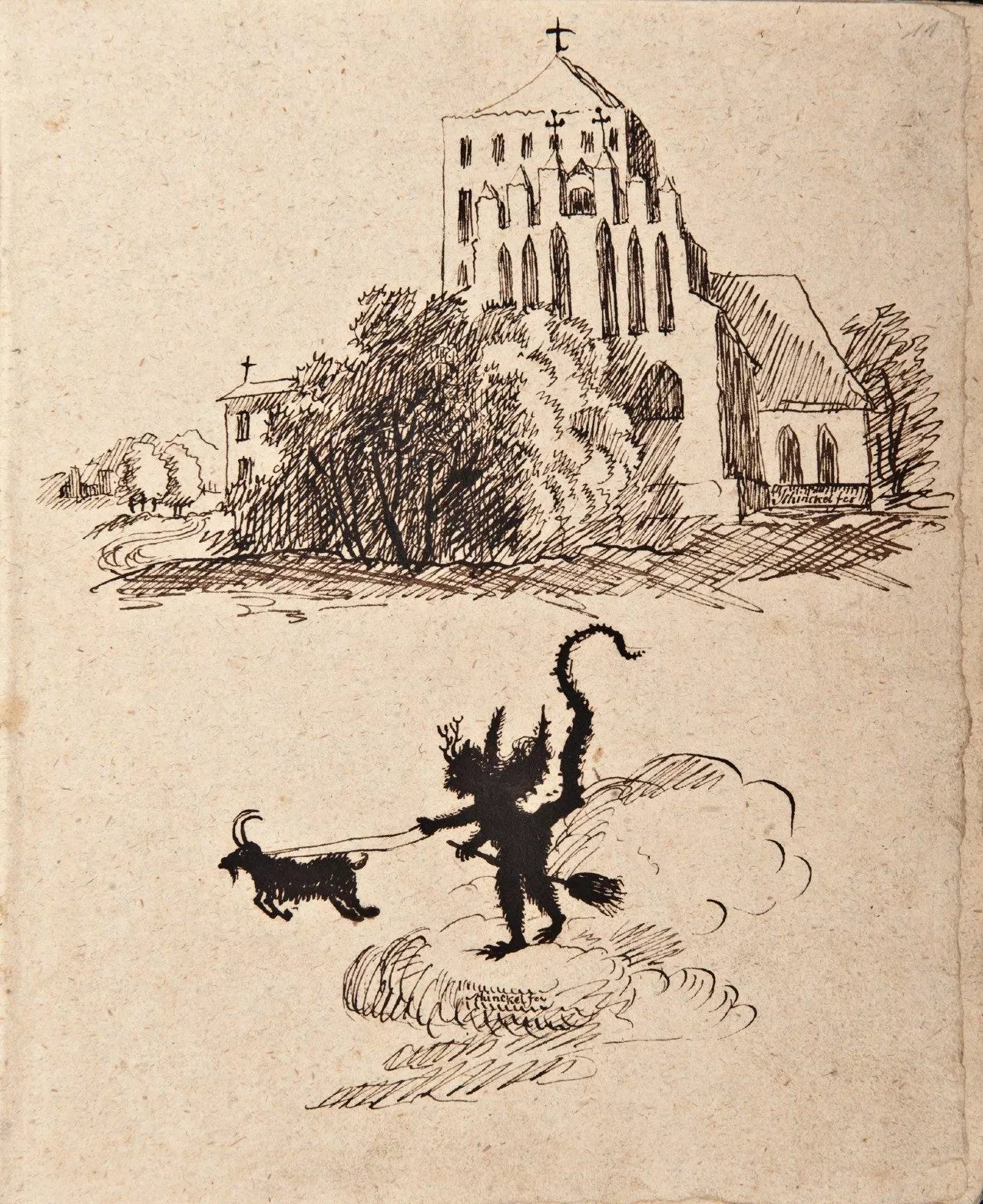
In the background there stands a country church, solid but unimposing, nestled in a sleepy landscape of bushes and footpaths. A quaint scene, confidently sketched. Except there is a figure in front of the church, a creature of some kind, rendered in thick black ink. It appears to be a visitor from another world: a devil with hairy limbs and a knobbly tail, sitting astride a broomstick… and being pulled along by a galloping goat. This weird fairytale image comes from the teenage sketchbook of Karl Friedrich Schinkel, the Prussian architect and painter. I am not sure what on earth the mischievous-looking monster represents (maybe someone better-versed in folklore can tell me), but I feel it tells us something significant about Schinkel, and about the German world to which he belonged.
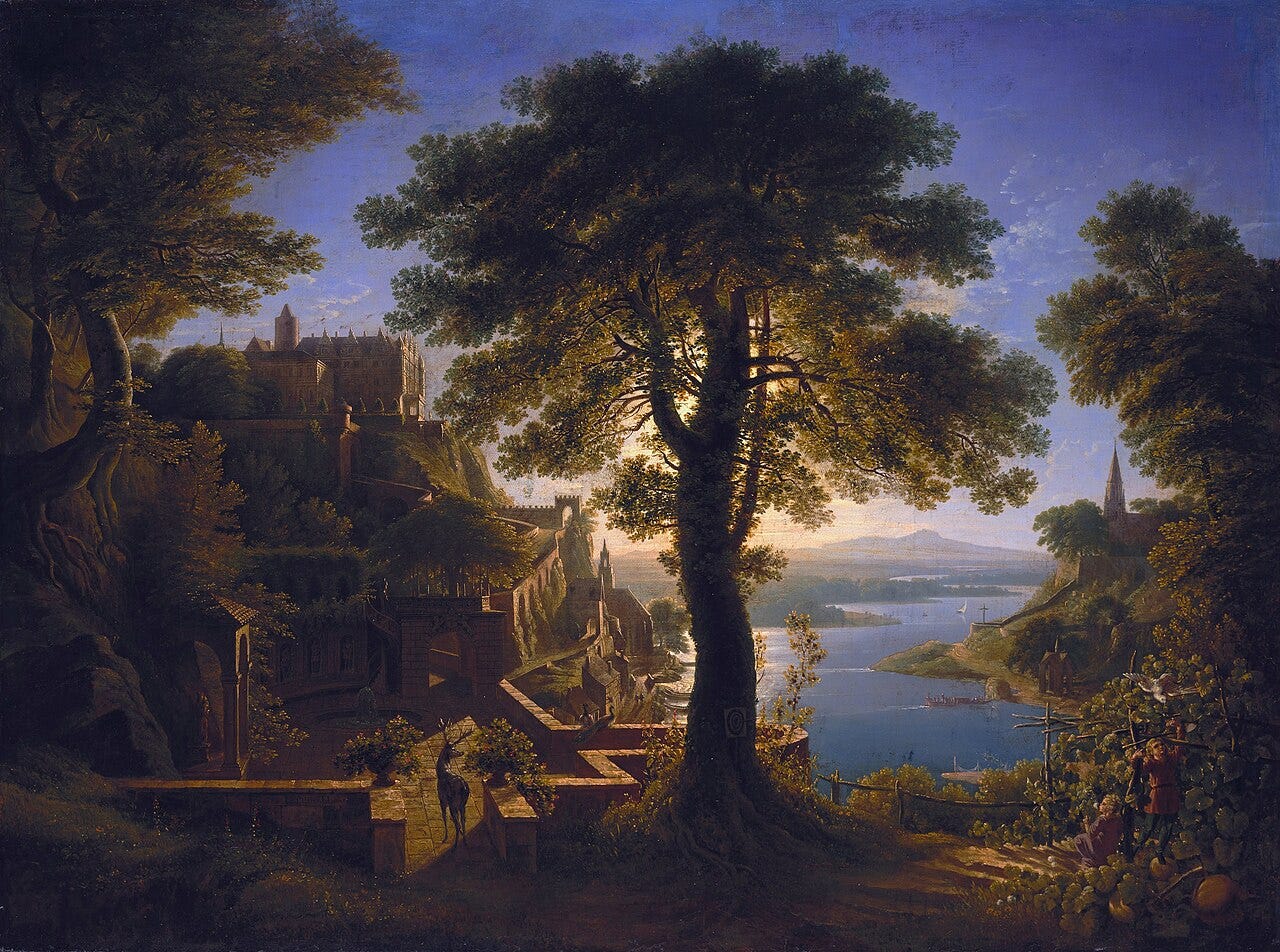
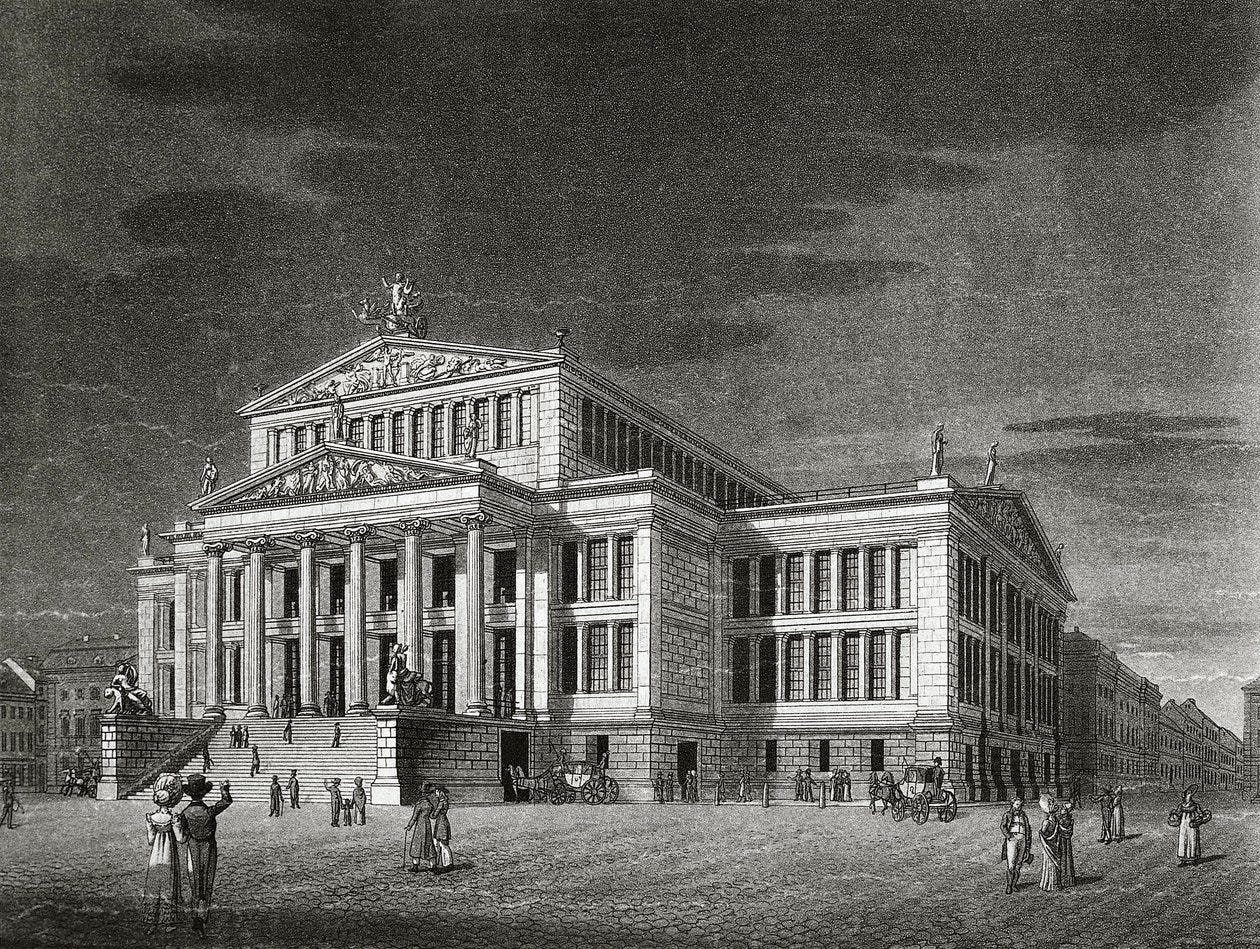
Schinkel made this drawing around the year 1800; two decades later, he would be designing some of the most impressive buildings in Berlin, monumental works of neoclassicism such as the Schauspielhaus theatre and Altes Museum. At first glance, these are familiar structures. Many European capitals were grandly decked out with columns and pediments during the Nineteenth century. But Schinkel’s whimsical ink drawing hints at something else: a receptiveness to imagination and mystery which are the hallmarks of the Romantic spirit. Better still, look at the landscapes Schinkel painted as an adult, typical works of Romanticism where Gothic towers loom in dreamlike atmospheres. This should alert us that Schinkel’s classical buildings in Berlin are not just there to invoke order, stability and tradition, as such architecture imitating ancient Greece and Rome is often assumed to be. These are Romantic monuments in their own right, infused with historical self-awareness, with the drama of a grand statement, and with the ambition to crystallise living emotions and ideals in material form.
This marriage of the classical and Romantic – of reason and imagination, structure and spirit – is not unique to the German world. We can see it, for instance, in the English architect John Soane, a contemporary of Schinkel, who on completion of his neoclassical Bank of England building commissioned an artist to draw it as a ruin. Nonetheless, I regard this as part of the German genius.

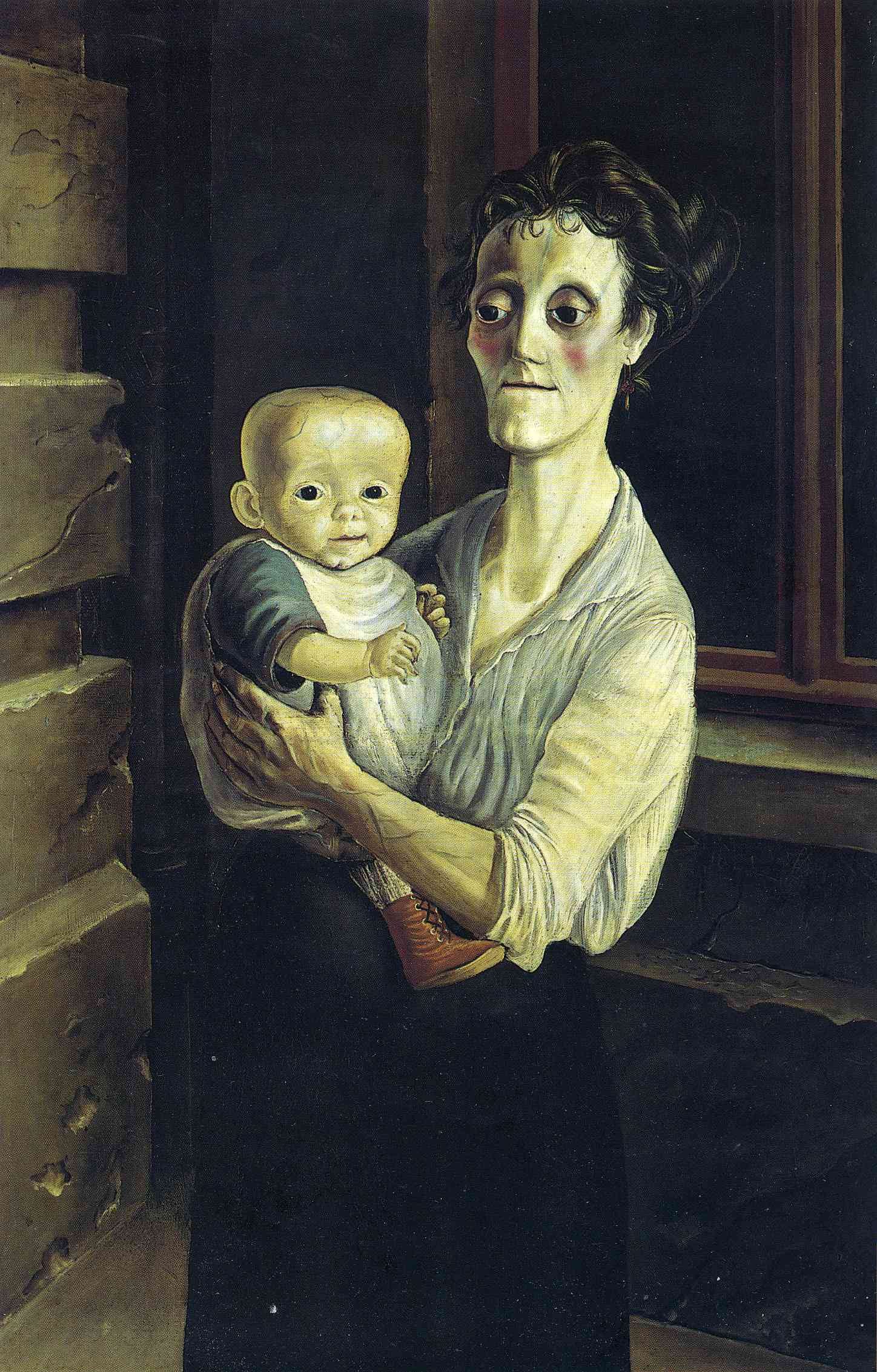
As a teenager in Britain I got my first glimpse of Germany in the usual way: grainy photographs in history textbooks describing the rise of Nazism. My impression was of a land where people pushed around money in wheelbarrows and worshipped very large flags. It was during my twenties that I began to suffer from an acute curiosity about the Germans. As with most of my enthusiasms, this developed mainly through the medium of books, but it began with art. I inherited from my mother a love of the Neue Sachlichkeit (New Objectivity) movement, which emerged during the Weimar years of the 1920s.
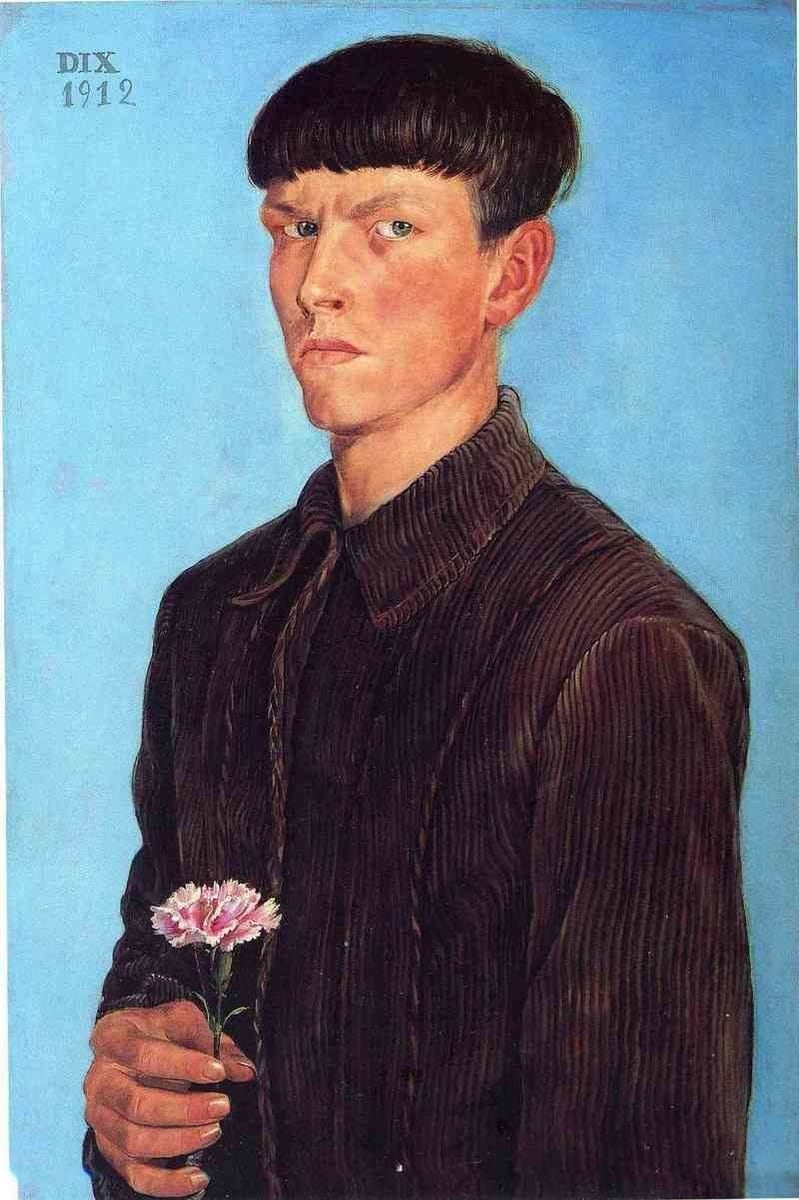
In hindsight, I wonder if I did not already sense something of the duality I was discussing in relation to Schinkel. The portraits of Otto Dix were described as Sachlich because they demonstrated an attitude of frankness and unsentimentally, an attempt to look the modern world square in the face. Yet there is still something enchanted in this image of modernity. I am not surprised to find that the young Dix painted himself with a medieval hairstyle and a carnation in his fingers, a symbol of love.
From here I began to wander into the surrounding neighbourhood of Weimar culture, and thence into the deep forests of German philosophy, history and language. (Since I speak Afrikaans, a variant of Dutch, the German language has an uncanny quality, both familiar and bafflingly complicated). An interest in design only inflamed my Germanophilia. To a surprisingly large degree, what we think of as modern design is the progeny of German and Austrian movements in the early Twentieth century, spread across the world by émigrés fleeing Hitler. Somehow, the civilisation that produced Bach and Mozart, Kant and Hegel and Nietzsche, also produced Adolf Loos, Mies van der Rohe and the Bauhaus. (And that, of course, is to leave aside the frankly preposterous contribution of Germans to modern science.)
The issue with Germany is that it’s very difficult to work out what it actually is. It has taken so many forms, and its borders have shifted so much, that our contemporary view of it as a tile on the chequerboard of homogenous European nation states is extremely misleading. The place where Kant was born and lived, Königsberg, is now Russia. Salzburg, the birthplace of Mozart, is today in Austria, but at the time belonged to a kind of cartographic freak show called the Holy Roman Empire. The commonly recognised origin of today’s Germany, the Wilhelmine Reich that existed between 1871-1918, encompassed a far larger area; yet with Austria-Hungry next door, it was not even the largest territory ruled by Germans at the time.
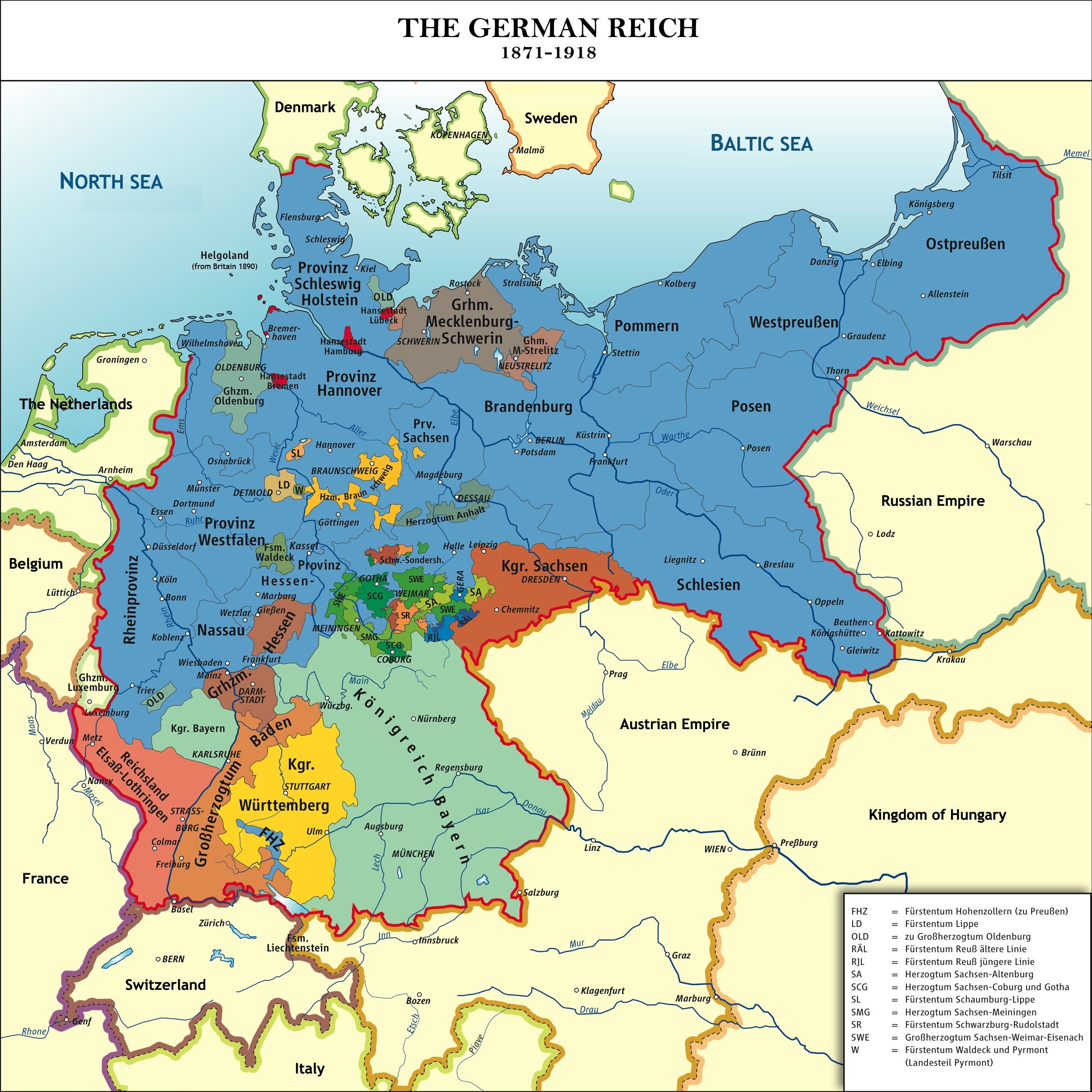
What this shapeshifting tells us is that Germandom belongs to a larger story. This is the story of Central Europe, which is told in my friend Luka Ivan Jukic’s wonderful book Central Europe: The Death of a Civilization and the Life of an Idea. Reading this book and speaking to Luka has changed my picture of Europe and Germany’s place in it. I now think of Central Europe as a lost world in the heart of my own continent, a European Atlantis submerged by the tides of history. Projected onto today’s map, this Mitteleuropa would stretch from Croatia in the south towards the Baltic states in the north, from parts of Ukraine in the east to the French border in the west.
The discrete nations that now occupy this area are a product of the great catastrophes of the Twentieth century, which annihilated something quite different that existed there before: a Central European civilisation encompassing a multitude of peoples, many of them inhabiting kingdoms, empires and cities under some form of German leadership or German cultural influence.
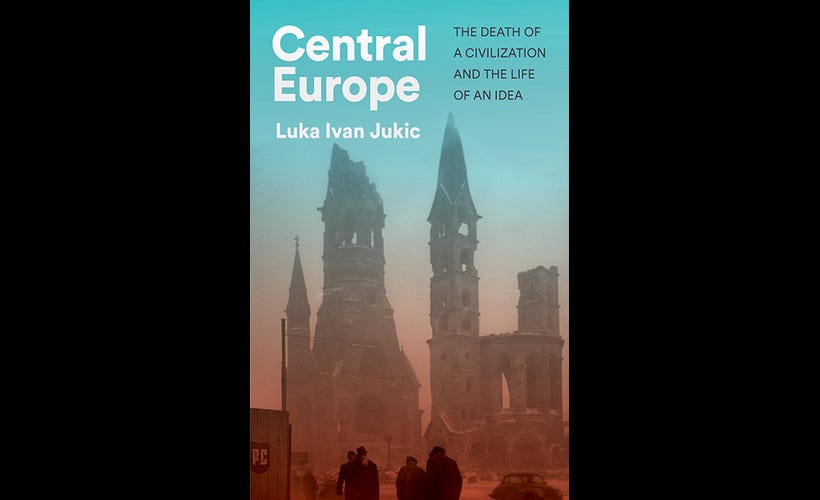
As Jukic writes in his introduction:
Central Europe was identifiable as a constellation of linguistically and religiously diverse polities and societies that eventually developed into the great powers of the German Reich and Austria-Hungary. … What united this assemblage of territories was a political link to the House of Habsburg inherited from the long eighteenth century, their cultural position in Europe between an Anglo-French “West” and a Russian-Slavic “East”, and the position of standard High German as the regional language of high culture, social advancement, and intraregional communication.
…
Central European civilisation died a gruesome death in 1918-48. The scale of the catastrophe is difficult to comprehend, especially for those from Western European countries that have had relatively stable borders for centuries. Most urban centres were left bearing almost no resemblance to their prewar selves. If not physically destroyed, their character was irreparably damaged by the loss of prewar populations and the relocation of new national majorities from the countryside to the cities. … By mid-century it was an unrecognisable, traumatised ruin, turned into the frontline of a global Cold War.
One aspect of the German story this brings into focus is the tension between the nation and the state; that is, between the culture and identity of Germans, and the political structures in which they lived. It was far from inevitable that the Central European story would end with a Nazi state seeking to conquer the region and to turn much of it into the exclusive possession of ethnically German citizens. This fantasy sprung from a late-Nineteenth century extremist fringe, and did not achieve political power until a World War and several economic disasters had unfolded. In earlier eras the picture could hardly have been more different. Germans were spread across a plethora of states with their own identities and allegiances, while the language they shared was also used by numerous non-German peoples, providing the basis for a Central European public sphere that, as Jukic writes, “showed little concern for political boundaries or national origins”.
I suspect these conditions are partly responsible for the richly contrasting ideas and tendencies we see in individuals like Karl Friedrich Schinkel. He came of age at a moment when the archaic patchwork of Central Europe was struggling to reconcile itself with the rise of powerful modern states. That struggle produced in some Germans profound reflection on themes of development, identity, self-determination, and the relationship between the particular and the universal. Such questions animated thinkers as different as Goethe, Humboldt, and Hegel. And often, as with Schinkel, whose role as an architect was to give the Prussian state aesthetic form, this field of reflection was loosely framed by the poles of the Romantic and the classical.
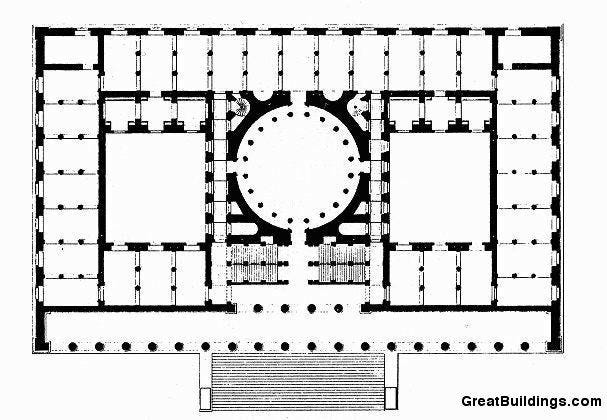
Tracing such patterns across different chapters of history is difficult, and there is always a danger that you will see what you are looking for and not what is there. Nonetheless, they sometimes appear even in German contributions to modern design. Take Ludwig Mies van der Rohe, whose minimalist glass rectangles became a dominant mode of architecture in the Twentieth century. Modernism never made such a radical break with the past as some of its supporters, as well as its critics, like to claim. As the architect Kenneth Frampton observes, Mies was heavily indebted to the neoclassicism of Schinkel; that much is clear from a comparison of Schinkel’s Altesmuseum with Mies’ Crown Hall in Chicago. Frampton likewise points out that there is something “decidedly Hegelian” in Mies’ thinking about history, as captured in his statement that “architecture is the will of the age conceived in spatial terms”.
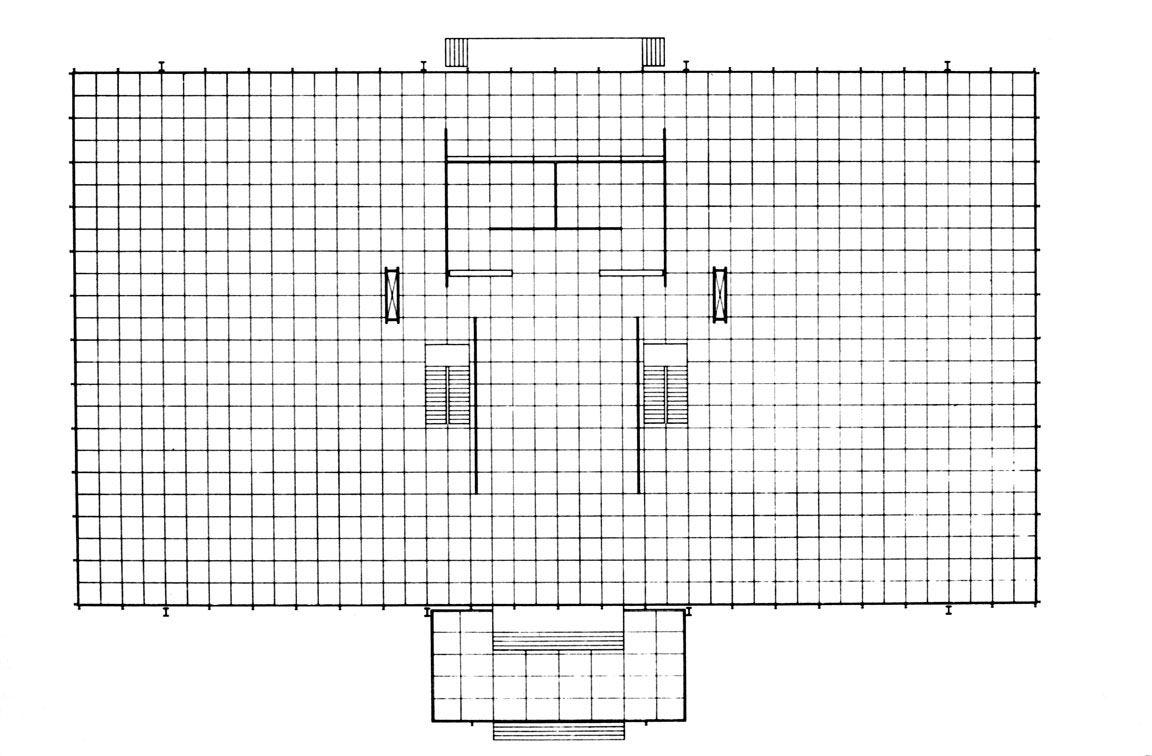
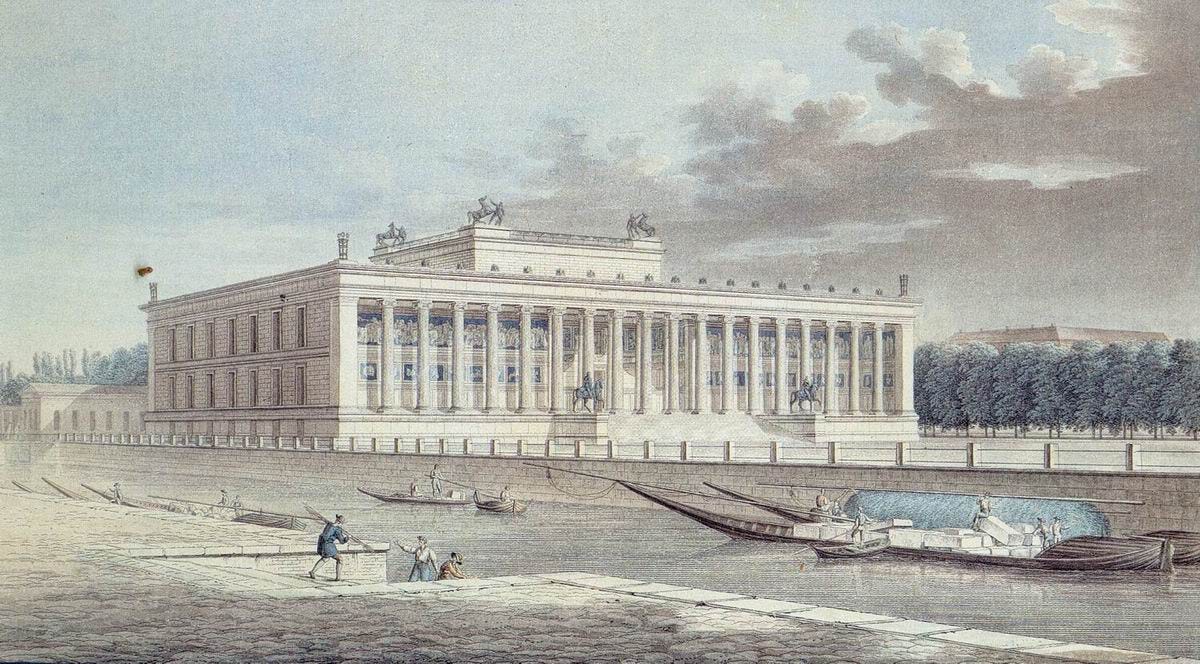
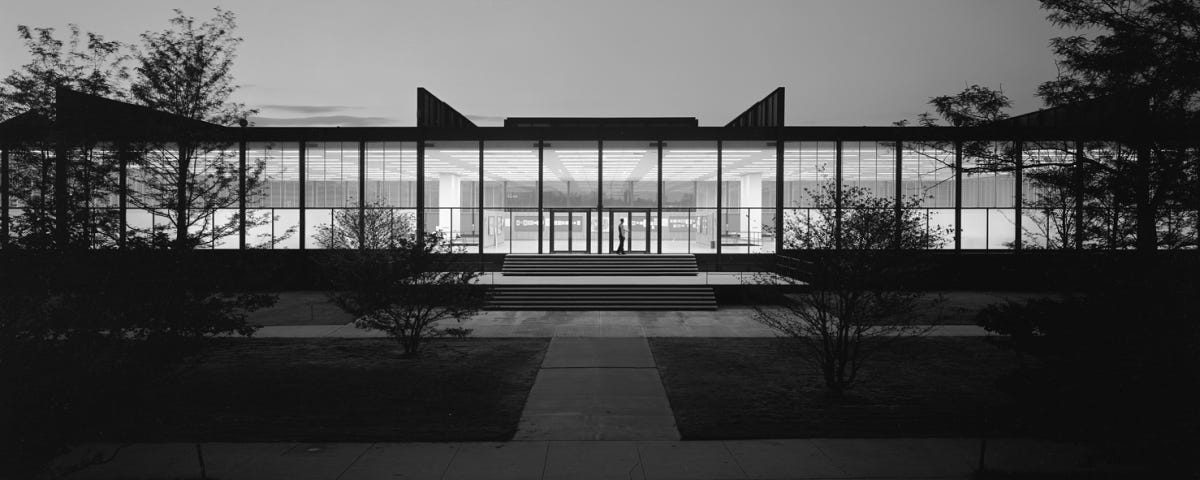
The very success of Modernism from the 1950s onwards, bringing about what Thomas Heatherwick has dubbed a “blandemic” of often very ugly glass boxes, obscures the extent to which this style of design was, at its inception, renewing a dialogue of contrasting impulses that still retained some Romantic elements. A fascination with eternal Platonic forms vied against a relish for the drama of history, and reason contended with a will to express something deeper in the collective unconscious.
Of course, in a brief essay one can't cover everything, but there was also great resentment against the German language Mittel Europa uniculture. Starting in the 19th century there was desperate effort to create indigenous language cultures in contrast to the dominance of elite German culture. When these emerging national cultures got their unexpected chance at the Versailles conference post WWI, they were ready to pounce and destroy the dominant culture that you so value.
Incidentally, you were right about the need to log in to successfully make a comment. Thx!
I enjoyed that!