
Dubai-Bashing
Why the British love to hate the Emirati boomtown

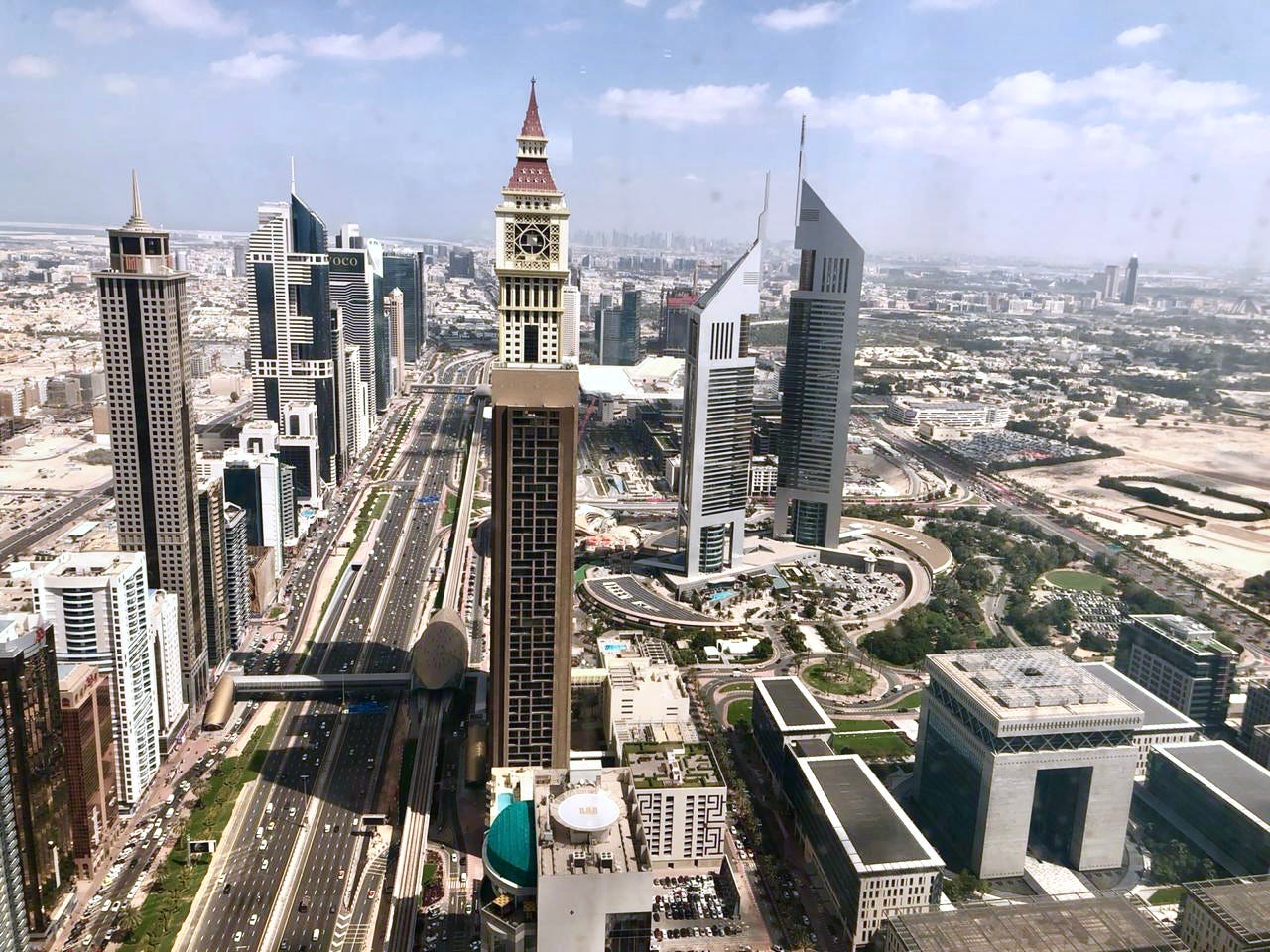
During the first week of another war in the Middle East, the conversation in Britain has focused less on Iran than on Dubai, the Emirati metropolis where a quarter of a million Brits live as expats. The spectacle of those emigrants cowering from Iranian missiles has occasioned some Schadenfreude here in the home country, where Dubai has come to be associated with self-worshipping lifestyle influencers and Rolex-touting crypto guys who boast about their luxurious circumstances on Instagram. Imagining that the smug have been humbled is, from some in Britain at least, a positive result of the war.
Some have gone further, expressing outrage that people who moved to the Gulf entrepôt for its 0% rate of income tax may soon enjoy an emergency exit courtesy of the British state. But others point out that young Brits, whether ambitious or merely sane, can hardly be blamed for seeking to escape this country’s failing social contract, which asks them to pay ever greater levels of tax for broken public services and decaying town centres, without any prospect of owning a home or paying off their student debt.
I have never visited Dubai, unless you count an overpriced flat white consumed while stopping over at the airport, but the city does seem emblematic of the darker sides of globalisation. Like the Epstein affair which dominated the news before the strikes on Tehran, Dubai speaks to the corruption, exploitation and greed which has flourished among the globetrotting elites of the late-twentieth and early-twenty first century. It is a place where ill-gotten wealth from around the world exalts itself in surroundings built and maintained by an underclass of migrant workers, who are paid little and have few rights. (Oligarchs and white-collar criminals are familiar enough with London, of course). But Dubai also represents what we could call the tragedy of the global middle class. There are millions of people in different parts of the world who simply want to live with a degree of comfort in a functioning society, but have found this modest goal impossible to achieve in the countries where they live. For such families, an air-conditioned apartment on the fifty-fifth floor in an authoritarian Gulf kingdom is more a lifeboat than a lifestyle choice.
Dubious riches and frustrated aspiration are both endemic to the world today, so it isn’t surprising to see the Dubai recipe being exported elsewhere, with its accompanying ideals of luxury, efficiency and technology. Dubai is the model most frequently invoked by Africa’s “satellite cities,” privately managed settlements that offer low tax settings for international business, along with the opportunity, for the continent’s wealthier residents, to withdraw from the poverty and chaos of their societies. But the shiny urban projects of the Arab Gulf states – see also Saudi Arabia’s Neom – remain unique in the way that social media influencers have become integral to their political economy. For places that depend on attracting rich, highly status-conscious foreigners, image and hype are almost everything. This is why the Emirati leadership has rapidly cracked down on residents publicising the effects of the war in ways that risk damaging the city’s reputation.
But the disgust directed at Dubai from British shores appears to be, as much as anything else, the return of a repressed aesthetic judgement. Criticism of Dubaians often boils down to their alleged crimes against good taste: tackiness, vulgarity, louche extravagance and, in architecture especially, bland opulence. These things are all, of course, present in Britain. We encounter them every day on social media, in marketing and celebrity culture, in public spaces and in our own neighbourhoods. But since we have lost the ability to talk and think about the significance of aesthetics, and since we are scared to sound like snobs, these observations tend to be left unstated, at least publicly. Only when accusations of bad taste can be smuggled in with more established sins, like tax dodging and arrogance, do Brits feel they have permission to speak their minds.
A utilitarian defense of the UAE model is that it produces more total benefit for more people than a country like England, precisely because it is less committed to equal membership and more committed to functional exchange. The UAE can admit huge numbers of migrants without having to absorb them all into a full welfare and citizenship compact. That means more poor and middle-income people from abroad get access to much higher wages, more families back home benefit from remittances, more businesses get the labour and commercial environment they want, and citizens retain a stable, ordered, high-benefit society of their own. It is also better for its own citizens in straightforward material terms, because they do not have to extend the same level of long-term welfare support across such a large migrant population, which keeps the fiscal burden on natives lower. England, by contrast, is far more constrained because migration is tied more closely to settlement, political incorporation, public services, and welfare-state expectations. So even though England speaks more in the language of equality, it generates less aggregate benefit because it cannot scale mutually advantageous migration nearly as far.
That is what upsets people about the comparison. A state that is openly hierarchical, highly capitalist, and unapologetically unequal delivers more practical benefit to more human beings than a softer, more egalitarian society. The irritation comes from the fact that many people want moral legitimacy to track the language of equality, rights, and inclusion, yet the UAE shows that a system can reject much of that rhetoric and still create enormous material gains for citizens, expats, migrant workers, and migrants’ home countries. The provocation is not just that the UAE is right wing. It is that a country many assume must be morally inferior is, on utilitarian grounds, the more successful and more humane model.
The UAE forces apart two moral ideals that liberals and the left have long liked to imagine they alone could yoke together: equality and utility. They have tended to see themselves as the natural masters of both, assuming that the fairest society would also be the one that produced the greatest good. But the UAE disrupts that moral monopoly. It suggests that a society can reject egalitarian ideals internally while still delivering enormous practical gains to citizens, migrants, businesses, and poorer countries abroad. In doing so, it steals at least one of those moral claims, and perhaps both. The real discomfort lies in the possibility that the supposedly harsher model is not merely more efficient, but more effective at improving lives at scale than the supposedly kinder one.
I make no claims to high quality artistic taste, but I actually like much of the architecture, and in cases where I think its off it will be because of just one "thing", like, the building that is in the center foreground of the photo you have at the top of the essay, its named the "Big Ben Tower", I think its too narrow, it should be wider, but other than that I think its decent (not great, just but pretty decent), and I actually like much of they "Neo-Futurism" (that is, I take it, the most common name for the style) office buildings; in regards to budlings constructed within the past 2 decades, I'd say their less shackled to the System's art types than the UK is, maybe that is a subconscious source of dislike (not saying it is)?