

Jessica Foster is a remarkable woman: the kind of confident, photogenic, high-achieving individual that the online world was made for. An attractive young soldier in the US Army, who proudly espouses her patriotic views, it is little wonder that Foster found her way into the entourage of Donald Trump himself. You can see photos of her meeting with foreign leaders in the Oval Office, on board a warship in the Middle East, and speaking at a major international summit.
Jessica Foster, you will be shocked to learn, is not a real person. She is a character designed by generative AI algorithms, who exists only in fake photographs posted to social media, where she attracted over a million Instagram followers before her account was removed in March. Some of those followers were directed to an OnlyFans page, where they were invited to pay for fetish imagery featuring the fictitious soldier. That’s right, “Jessica” is not only a dutiful servicewoman and MAGA supporter, she is a sexual deviant too. Whoever invented her may lack originality, but they certainly understand what sells.

Around the world, a large and growing amount of social media traffic revolves around the lives of such entirely fabricated people. (Whether audiences know that women like Jessica Foster are fabricated is another, somewhat disturbing question). Attention is likewise being captured by AI-generated news articles, music playlists, audiobooks, billboard images and Youtube videos, which are presented, explicitly or implicitly, as human creations. This automation of authorship has long since broken out of the digital sphere, wending its way into our material environment through new design processes; my very first piece at the Pathos of Things was about the algorithms used by Shein, the Chinese ultra-fast fashion retailer, to identify and copy popular styles from the Internet.
Culture is undergoing an implosion similar to one that occurred in the mid-19th century, when the emerging factory system flooded the consumer market with cheap, mass-produced goods. Now as then, the consequence will be a large number of people being made redundant, some of them skilled, along with a general deterioration in our aesthetic environment. The Victorians used words like “vulgar”, “shoddy” and “pretentious” to describe an abundance of knock-offs and low-quality products; we speak of “enshittification” and “slop”.
But history also suggests that, in reaction to this degradation of culture, people will once again turn to craft as a source of beauty and integrity in our surroundings (craft is always being rediscovered; maybe every generation must discover it for itself). We may, in time, see new equilibriums emerge between technology and craftsmanship. In the ideal case, the inherited knowledge contained in craft practices will redeem and civilise the potential of technology, while technology will allow that knowledge to survive and renew itself. Many of the movements that laid the foundations of modern design, from Art Nouveau to Bauhaus Modernism, were in part attempts to reintegrate craft principles with industrial materials and techniques (a story I will be telling in more detail later this year – stay tuned). Such marriages of old skills and new methods can never defeat the forces of cheap crap, but they keep alive the possibility of good design.
None of this happens by accident, though. It requires people and movements to set out to do it. That is why I was excited to discover Nation of Artisans, a project founded by Louis Elton that seeks to document and celebrate British practitioners of material workmanship and creativity. You can see the Substack here. It’s shaping up to be a wonderful catalogue of the craft expertise that lies hidden in the recesses of Britain’s service economy. Subjects include a workshop making bespoke welted shoes, the country’s last fine paper-making plant (which also manufactures advanced materials for aircraft and wind turbines), a London ceramicist, a luthier (or maker of stringed instruments), and a factory producing high-end metal trays. Each company contains a story about the ability – and economic necessity – of craftsmanship to change with the times, incorporating new methods and responding to new circumstances. Each individual has adapted their learned skills in some unique way, while sharing in common the satisfactions of making things with accomplishment and care.
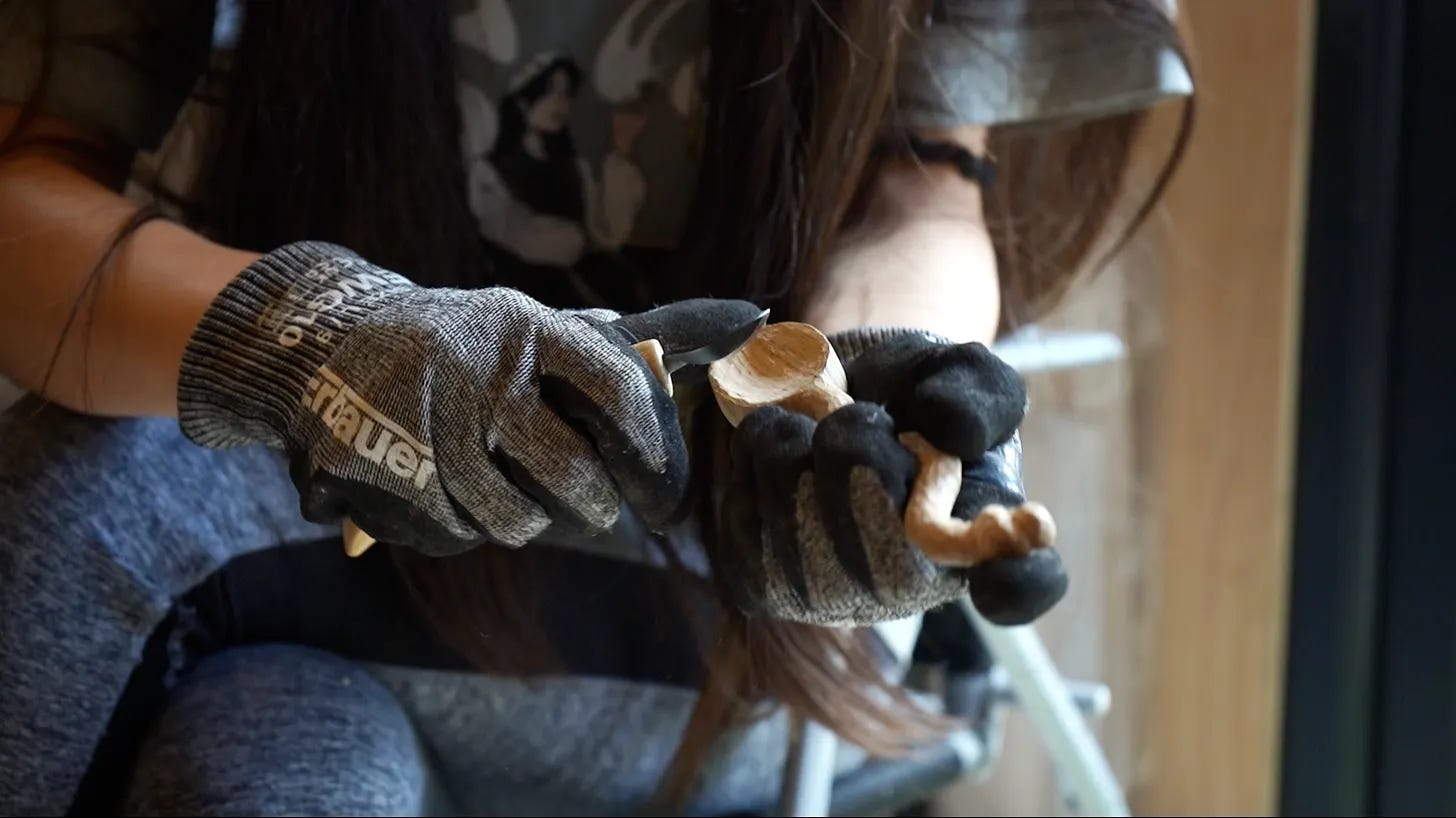
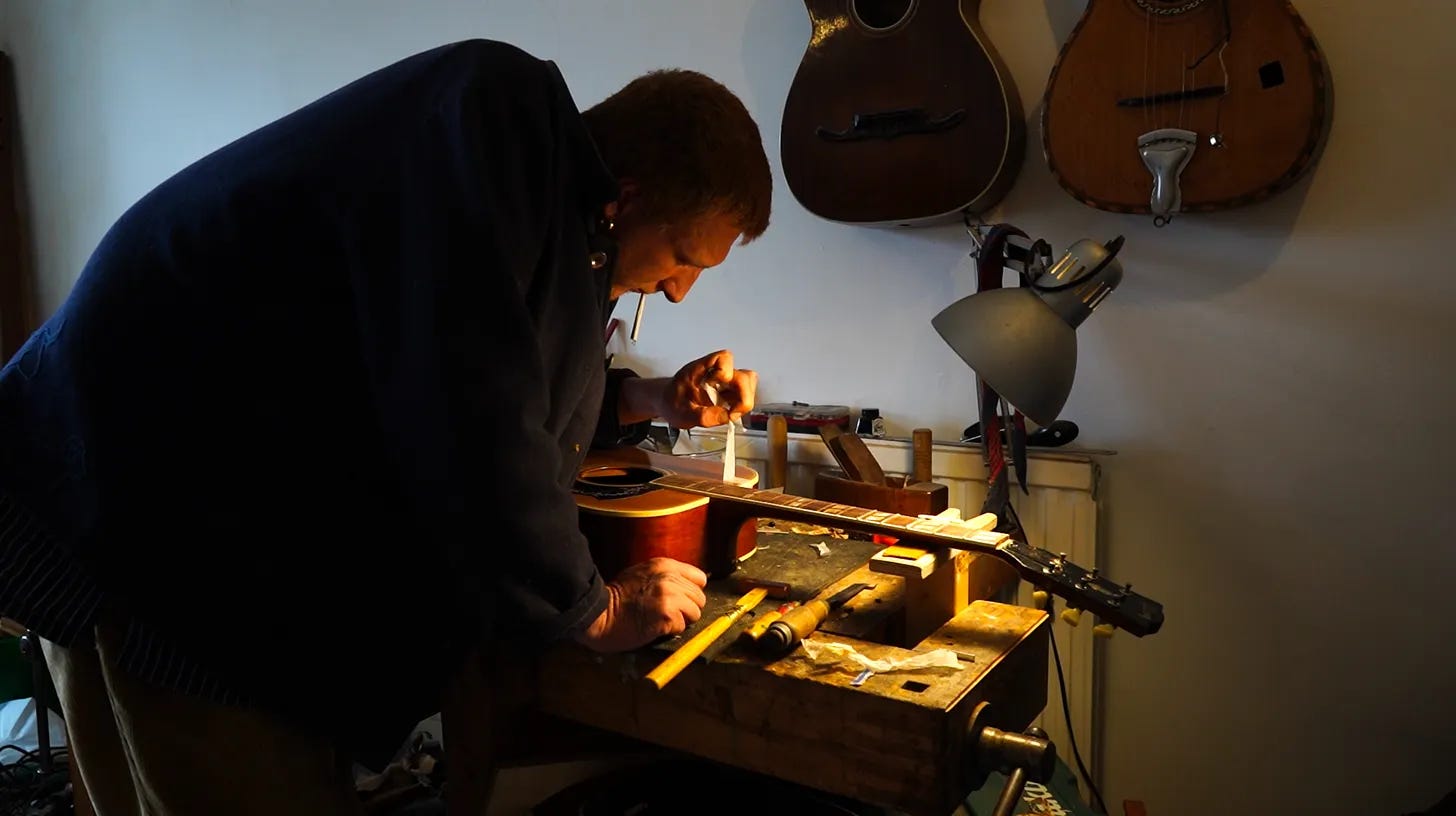
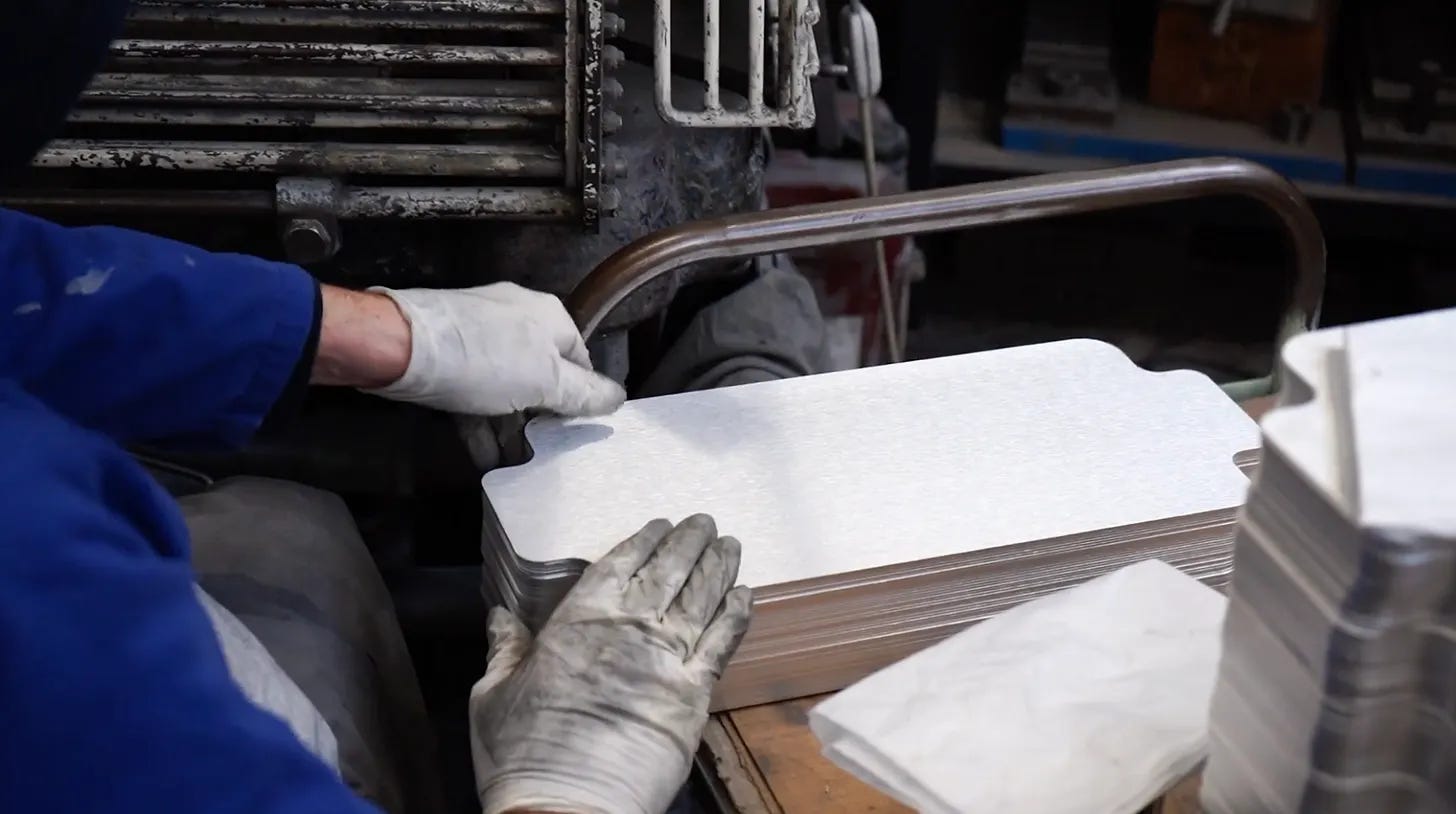
Elton prefers to speak not of craft but of “cræft”, an Anglo-Saxon term dating back to the Ninth century, meaning “the virtuous application of knowledge and power to produce excellence in a way that binds hand, eye, heart, mind, material, place, and history into a coherent practice.” As I understand it, the idea here is to separate craft from its technophobic, purist connotations, and to emphasise its ability to conquer new domains while remaining rooted in a continuous history. Similarly, Elton contrasts Artificial Intelligence with “Artisanal Intelligence”, the latter evoking the embodied competences and ways of thinking that skilled people can apply to new tools (and that tools, by definition, do not possess by themselves).
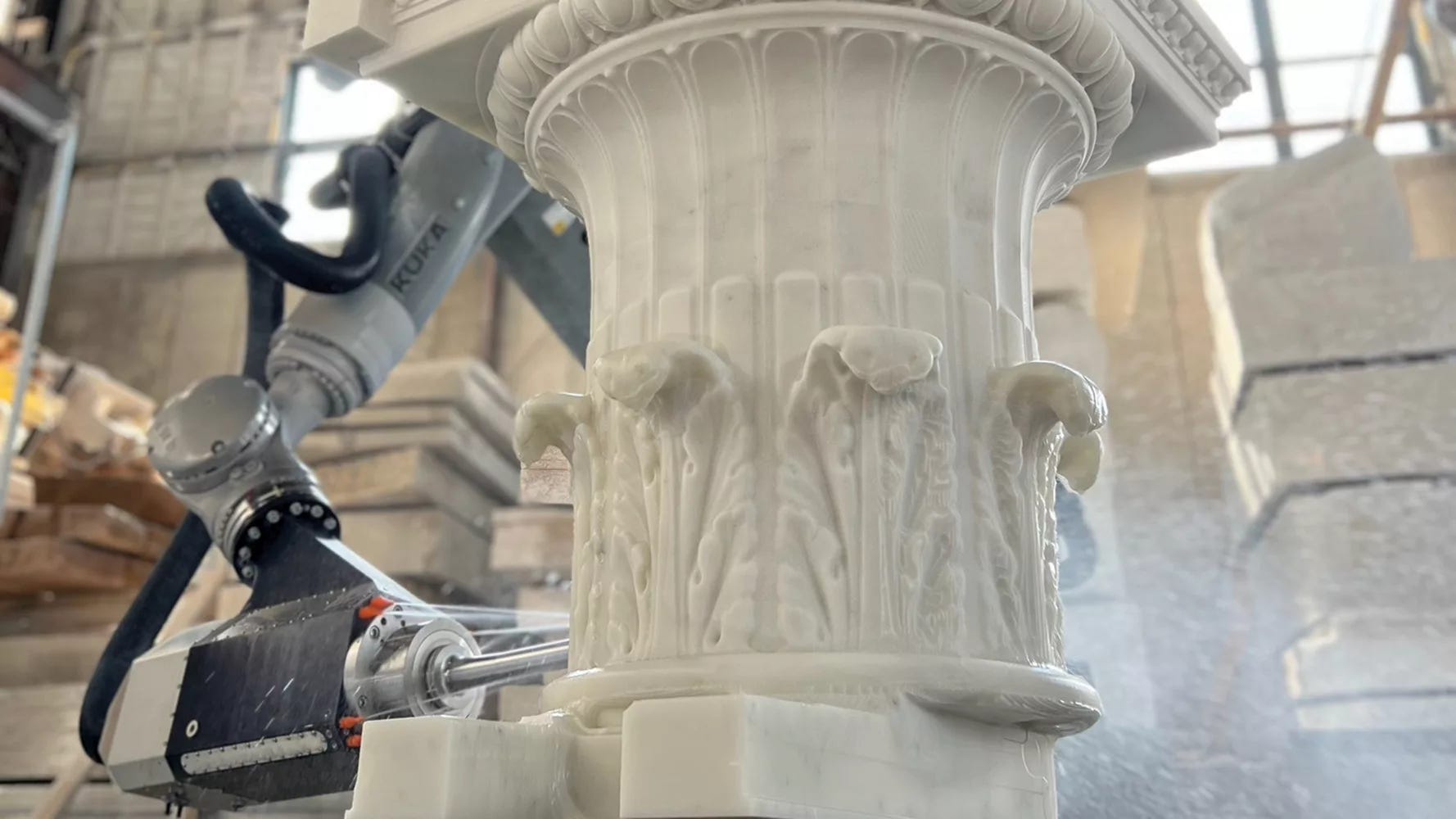
To encourage these qualities, Elton a few months ago launched the British Cræft Prize, an award for designers who “draw on the deep wisdom embedded in the heritage crafts of the past and combine it with the cutting-edge technologies of the future.” By way of inspiration, he offers some existing examples. An apparel company has managed to combine origami principles with novel materials to make clothes which grow with an infant. Stonemasons can now delegate rough work to robots, while keeping the fine work for themselves. A centuries-old timber company has used its knowledge of wood materials to build innovative satellites.
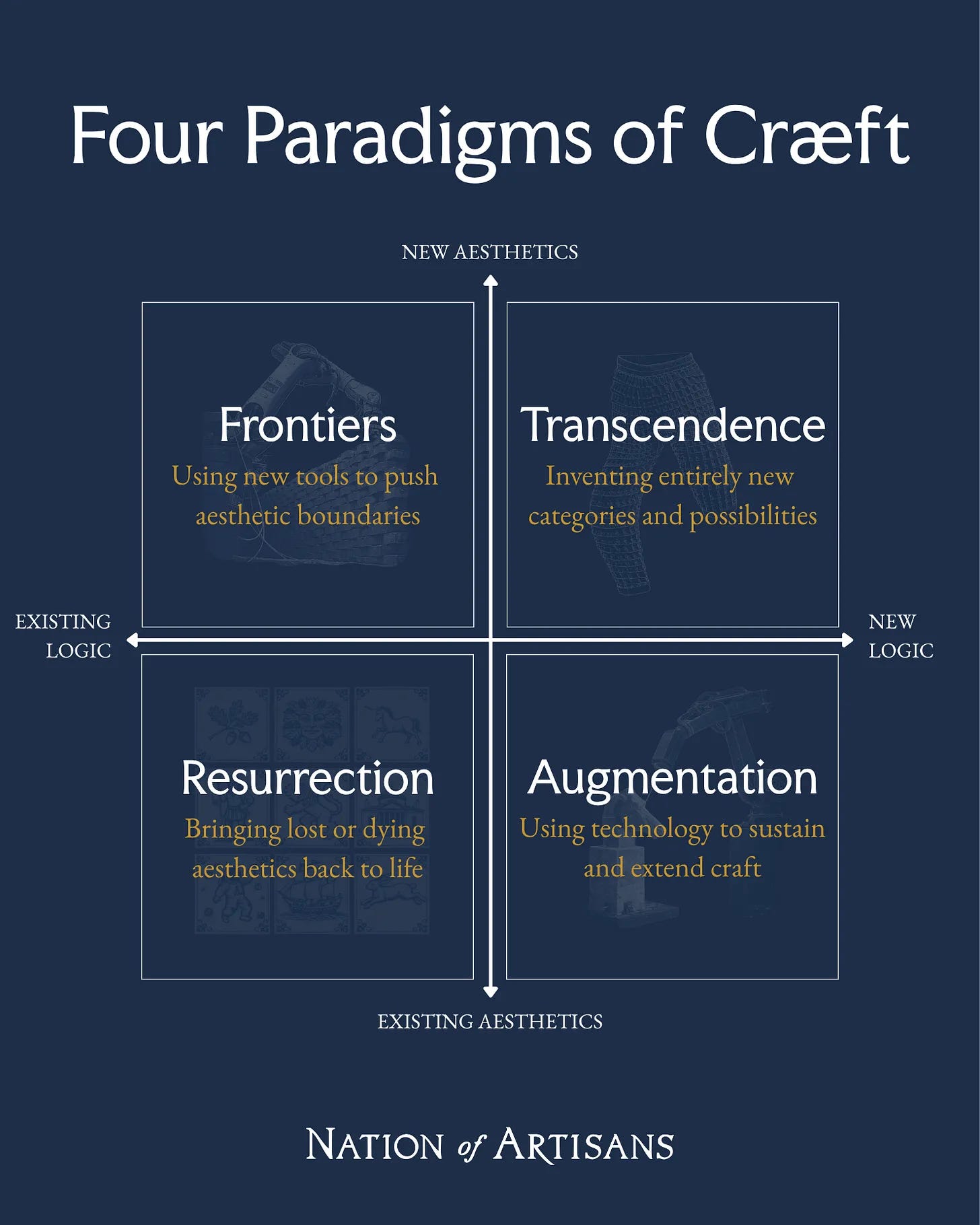
I should mention that I am not against Luddites. There will always be a place for them in the constellation of cultural practices. Some virtues and competences can only be kept alive by people sticking closer to the authentic source of their craft, fashioning products through the hard-earned and long-established unities of eye, hand and mind. In doing so, they maintain a reservoir of abilities that culture can draw on continually across time. Writing strikes me as one practice that cannot be meaningfully shared with machines if we want to sustain the mental skills and habits that it cultivates. (As Robert Conquest observed, everyone is a conservative about that which he knows best). But equally, some people are called to take their craft in new directions for the benefit of a world that is always moving, and aways in need of the artisan’s intelligence. If you are that way inclined, consider entering the British Cræft Prize.
Nice to see the æsh ( Æ - æ ) gaining some traction again :-)
As for the Cræft Prize -- more power to their elbow!